

Meseta cheese and Manchego come from the same Spanish tradition, but they shine in different moments. Manchego is the classic for a cheese board and special occasions. Meseta is the premium sheep’s milk cheese made for everyday cooking: sandwiches, pasta, eggs, salads and more.
Meseta is a Manchego-style cheese made in La Mancha from a blend of Merino, Churra, Assaf and Latxa sheep’s milk, and it has no DOP. Manchego DOP is made only with Manchega sheep’s milk under a protected designation. Manchego is the classic for boards; Meseta is the perfect everyday premium sheep cheese for cooking.
Both cheeses are made from sheep’s milk in the plains of central Spain, and both have the rich, nutty, slightly tangy character that defines Spanish sheep’s milk cheese.
Manchego is protected by a Denomination of Origin (DOP). It is made only in the La Mancha region, exclusively with milk from Manchega sheep, following the rules of its regulatory council. It is a benchmark for Spanish cheese.
Meseta is also made in La Mancha from 100% sheep’s milk, but its milk comes from four breeds: Merino, Churra, Assaf and Latxa. Without the constraints of a designation, this Manchego-style cheese is designed for how people actually cook and eat.

| Manchego DOP | Meseta cheese | |
| Origin | La Mancha, Spain | La Mancha, Spain |
| Milk | 100% Manchega sheep | 100% sheep: Merino, Churra, Assaf and Latxa |
| Designation | DOP (protected origin) | Manchego-style, no DOP |
| Sabor | Classic, distinctive, nutty, more piquant with age | Rich, savory and balanced, nutty with a gentle tang |
| Textura | Firm, buttery when young, drier and crumblier with age | Firm, smooth and compact |
| Best for | Cheese boards, tastings, special occasions | Everyday eating and cooking |
| Role at the table | The centerpiece | The versatile workhorse |
Flavor. Manchego has a recognizable, characterful flavor that deepens with age. It is a cheese to taste slowly, on its own. Meseta is rich and savory, with nutty, earthy notes and a slightly tangy finish. It has enough sheep’s milk character to stand out in a dish, and it is friendly enough for people who are new to Spanish cheese.
Texture. Both are firm. Aged Manchego tends to be drier and more crumbly, which is wonderful sliced thin with something sweet. Meseta has a smooth, compact texture that holds together when you slice, grate or shave it, which is what you want in the kitchen.
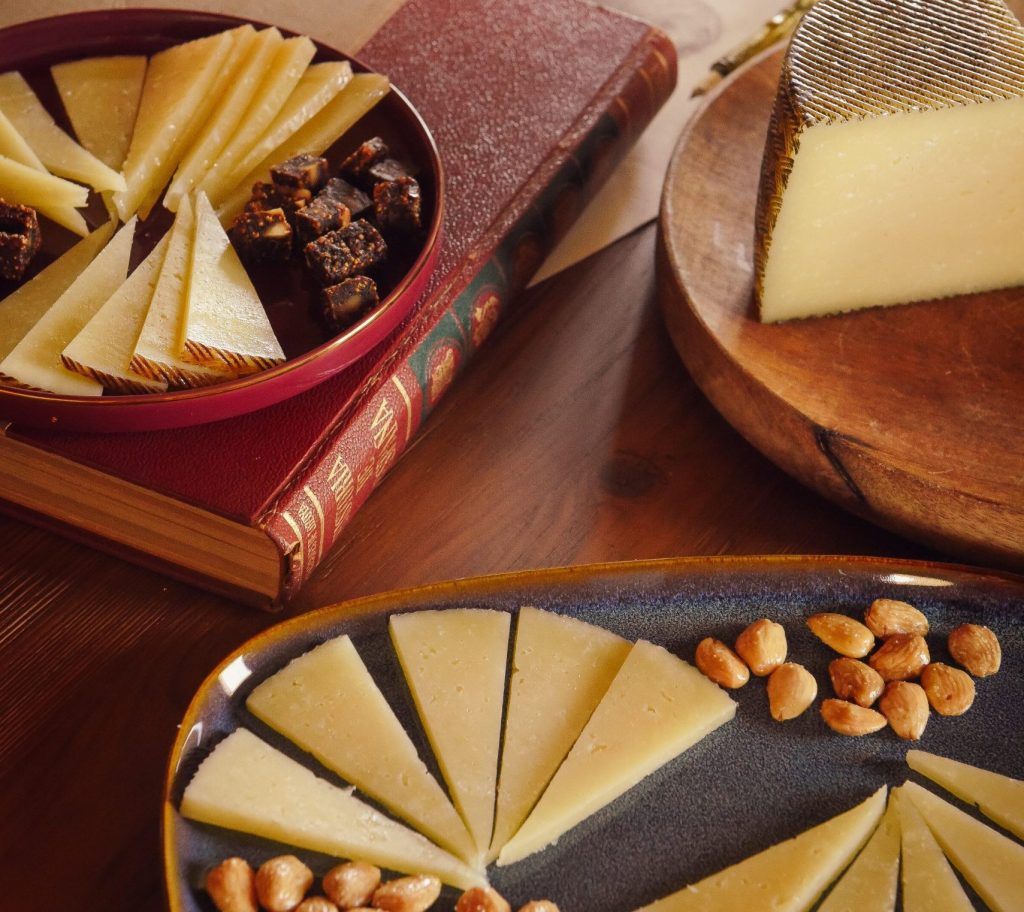
Slice Manchego next to Meseta with membrillo and almonds, then use the leftover Meseta the next day over eggs and potatoes. Same tradition, two experiences.
Is Meseta the same as Manchego?
No. Both are Spanish sheep’s milk cheeses from La Mancha, but Manchego DOP is made only with Manchega sheep’s milk under a protected designation. Meseta is a Manchego-style cheese made with milk from Merino, Churra, Assaf and Latxa sheep, and it does not carry the DOP.
Which is better for cooking, Meseta or Manchego?
Both can be used in cooking. Meseta’s smooth, compact texture and balanced flavor make it especially practical for everyday recipes.
Which is better for a cheese board?
Manchego is the classic choice for a board, and Meseta also works beautifully in a spread with several cheeses.
What does Meseta cheese taste like?
Nutty, savory and slightly tangy, with the creamy richness typical of sheep’s milk.
What sheep breeds are used to make Meseta cheese?
Merino, Churra, Assaf and Latxa.
You do not have to choose between them. Keep Manchego for moments that call for a classic, and let Meseta cheese do the everyday work in your kitchen. Find out more about Meseta.